
How to Budget for an Incentive Program: A Data-Driven Guide to Platform Rewards
Part Two of A Data-Driven Guide to Budgeting for Incentive Travel and Platform-Based Reward Programs
Setting the right budget is often the hardest part of designing an incentive program. Spend too little and the program fails to motivate; spend without a plan and it becomes difficult to defend the investment to finance and leadership. The good news is that there is more independent research available today than ever before to help you set a budget with confidence.
This guide walks through how to build a defensible budget for one of the most common incentive investments — platform-based (points, gift card, and merchandise) reward programs — using benchmark data from the Incentive Research Foundation (IRF).
Why Start With Benchmarks
Every organization's incentive program is unique, but budget conversations go much more smoothly when they start from an external reference point rather than a guess. Third-party research gives program owners three things a gut-feel number cannot:
- A credible number for finance and procurement — a budget anchored to independent research is far easier to defend than one based on “what we spent last year.”
- A way to benchmark against your industry — spend patterns vary meaningfully by sector, and by whether the audience is employees, salespeople, or channel partners.
- A way to track your position over time — annual studies let you see whether your organization is keeping pace with, falling behind, or leading the market.
The two research sources referenced throughout this guide are:
- IRF Industry Outlook - an annual IRF study on merchandise, gift card, and event-gifting budgets and trends across North America and Europe.
- IRF Top Performer Study - IRF research comparing the reward and recognition practices of top-performing companies against their peers, segmented by employee, sales, and channel program types.
Setting a Budget for Platform-Based Incentive Programs
Platform-based programs — points, gift cards, merchandise, and other non-cash rewards delivered through a technology platform — follow a different budgeting logic than travel programs. Because they typically run continuously throughout the year and reach far larger populations, platform budgeting should account for both reward funding and platform technology investment.

Step 1: Budget by Program Type, Not Just by Company
IRF's Top Performer research segments programs into three types — employee, sales, and channel partner — and each carries a different budget profile. Employee programs are the most common, but channel and partner programs consistently show the highest non-cash reward spend per participant of the three.
We asked Vic Sawi, Next Level’s EVP of Operations, if this aligns with what he sees when working with our client on Amplify platform builds, and why he thinks channel programs command that premium:
“As an organization that has strong representation in channel, we can confirm that they do have a higher payout per person because they are performance-based, there’s no recognition component. Channel programs build mindshare and, if they perform they build the budget through incremental sales. It’s built-in ROI.”
| Program Type | Adoption Among Top Performers | Budgeting Implication |
|---|---|---|
| Employee Recognition | 95% | Broadest reach; typically lower per-participant spend, but higher total participant volume |
| Sales Incentive | 83% | Higher per-participant investment; often tiered to reward top performers the most |
| Channel / Partner | 49% | Least common of the three, but concentrated among fewer, higher-value participants |
Step 2: Budget for the Technology, Not Just the Rewards
A platform incentive program has two cost centers: the rewards themselves, and the technology that delivers and tracks them. IRF's 2026 Industry Outlook found that among all non-cash reward budget categories - overall budget, program technology, communications, and administration -program technology (platforms, mobile apps, and related tools) is projected to see the strongest budget growth of any category, in both North America and Europe. When building your budget, plan for a distinct platform/technology line rather than treating it as an afterthought folded into general reward funding.
Source: Incentive Research Foundation 2026 Industry Outlook: Merchandise, Gift Cards, and Event Gifting
Vic lends his insights on technology budgeting, saying, “Research suggests that high-performing incentive programs direct 75% to 90% of total budget to participant rewards, with the remaining 10% to 25% covering platform technology, communications, administration, and program management. We typically estimate 4 to 15% for technology alone, depending on APIs, custom integrations, campaign requirements, and the complexity of data service needs. Real-time programs run on real-time data transfers via APIs and many clients need data workspaces or enhanced reporting and analytics to really understand their programs and make decisions. Additionally, program management costs can be somewhat variable, but include client service support and communications. A complex program is never truly plug and play. That’s when a consultative partner like Next Level can really help to anticipate and streamline costs, while providing the high level of service needed to take care of your top performers and most important customers.”
Step 3: Use Current Reward-Value Benchmarks
Reward values shift year to year, so it's worth refreshing per-reward assumptions annually rather than carrying forward last year's numbers. IRF's 2026 Industry Outlook found that average gift card values are rising in North America while holding steady in Europe, and that merchandise spend is climbing on both continents. North American merchandise spend per instance is up nearly $100 year over year, while European spend is up roughly €74.

Reward-type adoption among Top Performers is worth keeping in mind. 94% offer gift cards, 93% offer points-based rewards, 93% offer travel, and 79% offer merchandise — notably higher than average (non-Top Performer) companies across every category.
Sources: Incentive Research Foundation 2026 Industry Outlook: Merchandise, Gift Cards, and Event Gifting; IRF Top Performer Study
Vic also advises our clients to think about the program demographics when setting a budget.
“Think about what the average person can earn on an annual basis and is it worth the additional effort you are asking of them. As the saying goes, is the juice worth the squeeze? Instead of worrying about the redemption average, worry about what’s the average payout. Someone with a channel earning $5,000 will have a higher redemption average than one earning $500 per year. What’s happening competitively and what mindshare are you driving? That’s how effective budgets are built.”
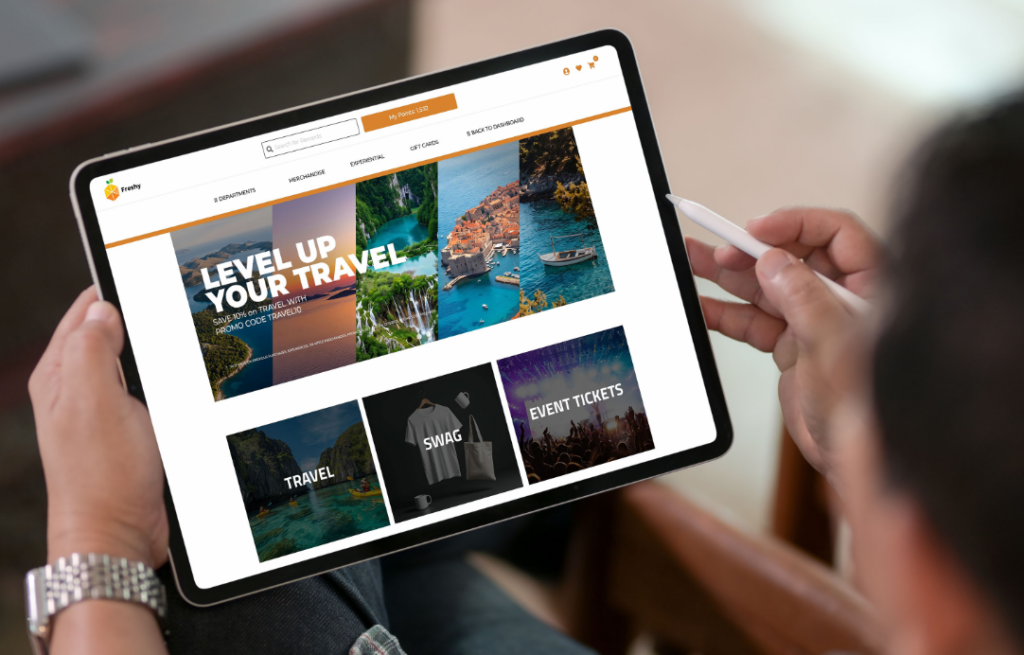
Platform programs deliver these rewards through a rewards marketplace where participants choose merchandise, eGift cards, experiences, or travel.
Step 4: Anticipate Flat-Budget, Higher-Expectation Conditions
Earlier this year, most organizations reported high economic optimism (over 90% in both North America and Europe) paired with flat budgets and rising costs. IRF's research shows the practical result: rather than cutting back broadly, companies are refining their reward mix, leaning on technology and personalization, and aligning offerings more precisely with what participants actually want. Budgeting for a platform program today should assume this same discipline: fewer, better-targeted rewards rather than broad, shallow ones.
Source: Incentive Research Foundation 2026 Industry Outlook: Merchandise, Gift Cards, and Event Gifting
In this marketplace, Vic notes that “Personalizing at the campaign level with tiered opportunities by role, regions, sales goals, and/or product to really keep participants engaged in any conditions. ‘What can I buy’ redemption functionality, personalized campaigns, and simple rules structures make a real difference in keeping a program relevant and interesting.”
Budgeting Tip
Channel and partner programs are the least common of the three program types among Top Performers, but they still warrant a distinct budget strategy. Build your reward-value assumptions around a smaller, more concentrated group of high-value participants rather than applying employee-program logic across the board.
How to Find Reliable Benchmarks
Incentive program benchmarks change every year, so it's worth building a habit of checking in on fresh data before each budget cycle. A few practical ways to stay current:
- Follow the annual release calendar. IRF's Industry Outlook is typically released in December. Top Performer Studies were released in 2025 and are regularly revisited.
- Segment any benchmark you use by program type. A single “average spend” number is far less useful than knowing where your specific program type (employee, sales, or channel) and industry fall within it.
- Revisit reward-value assumptions annually. Gift card values, merchandise costs, and travel per-person spend all shift meaningfully year over year — numbers that are a year or two old can understate what's needed to stay competitive.
- Track both the headline number and the trend. Whether budgets are rising, holding steady, or being cut across the industry is often just as useful for planning purposes as the dollar figure itself.
- Go to the source. IRF publishes their full studies and reference decks directly.
- Check out our Intel Hub where Next Level curates the latest research by industry.

Ready to Build Your Budget?
Whether you're designing a group incentive travel program, a platform-based rewards program, or both, grounding your budget in current, independent research from IRF and SITE gives you a stronger foundation for internal buy-in and better program outcomes. Our team works with clients every day to translate these industry benchmarks into a budget and program design tailored to your goals, industry, and audience.
Have questions about where your program should land relative to these benchmarks? We'd be glad to talk it through.


Let’s Talk
Ready to take the next step?
Contact us today to connect with one of our experts.