
B2B Loyalty: How to Measure Success in a Channel Loyalty Program & KPIs That Matter
A high performing channel loyalty program isn’t built by choosing rewards first — it’s built by defining success first.
Yet this is where many programs go off track.
Without clear objectives and KPIs, even the most well-funded programs struggle to gain traction. Participation may look strong initially, but over time, engagement fades, results become difficult to measure, and internal support weakens.
The difference between programs that perform and those that stall comes down to one thing: clarity.
Key Takeaways
A high performing channel loyalty program isn’t built by choosing rewards first — it’s built by defining success first.
Yet this is where many programs go off track.
Without clear objectives and KPIs, even the most well-funded programs struggle to gain traction. Participation may look strong initially, but over time, engagement fades, results become difficult to measure, and internal support weakens.
This is step one of our free downloadable resource: The B2B Channel Loyalty Blueprint.
Start with Business Priorities — Not Program Ideas
Before defining KPIs, step back and ask a more fundamental question:
What does the business actually need to achieve?
Effective channel programs are designed to support priorities such as:
- Increasing revenue or driving incremental sales
- Increasing customer mindshare and building long-term loyalty
- Expanding market share in key segments
- Accelerating product adoption or training completion
When objectives are clearly tied to business outcomes, incentives become more than a motivator — they become a strategic lever.
For a broader look at how these priorities are shaping programs today, explore trends in the industry.
Select KPIs That Reflect Real Behavior
Once priorities are defined, translate them into measurable KPIs.
Most successful programs focus on a short list, typically three to five KPIs, to maintain clarity and focus.
Core categories often include:
- Participation – Who is engaging and how consistently
- Sales Lift – Incremental performance influenced by the program
- Engagement – How frequently participants are logging in, utilizing resources, and redeeming points
- ROI – Return relative to program investment
However, not all KPIs are created equal. Strong KPIs share a few essential traits — they are tied to a specific behavior you want to influence, they can be measured consistently with available data, and they clearly connect to a business outcome — not just activity.
If you’re evaluating program performance holistically, this is also where distributor loyalty and incentive programs frameworks often come into play, connecting behavior to measurable impact.
Download the complete five-step B2B Loyalty Blueprint to see how leading organizations move from KPI definition to audience segmentation, program design, rewards strategy, and optimization.
Define Targets That Drive Action
KPIs only become powerful when they are paired with clear, time-bound targets. At a minimum, each KPI should include quarterly benchmarks and annual goals. To make these targets actionable:
- Establish a baseline before launch
- Align goals with sales cycles or seasonal trends
- Set targets that are achievable — but still motivating
Clarity in goal setting ensures teams know what success looks like and gives participants something tangible to work towards.
Create a Simple Program Brief
Before moving into program design, document your strategy in a concise, one-page brief. The brief should clearly outline:
- Program objectives and intended outcomes
- Target audience and eligibility
- Key behaviors being incentivized
- KPIs and success metrics
- Budget parameters
This step is often where alignment with your broader channel incentive strategy becomes critical, ensuring consistency across teams and initiatives.
Build a KPI Scorecard — and Use It
Defining KPIs is only the first step. Sustained performance comes from ongoing visibility. High-performing programs maintain a KPI scorecard and revisit it regularly, typically on a monthly or quarterly cadence, to ensure alignment and momentum. An effective scorecard should:
- Track performance against each KPI
- Highlight trends over time
- Be shared with stakeholders to guide decisions
Measurement isn’t just about reporting; it’s what allows programs to adapt, improve, and scale. Ongoing measurement ties directly into how organizations adapt and evolve, helping programs stay relevant over time.
Where Programs Commonly Go Off Track
Even with good intentions, many programs fall short due to a few common missteps.
- Defining too many KPIs, which dilutes focus
- Measuring activity instead of meaningful outcomes
- Setting goals without baseline data
- Failing to revisit and adjust targets over time
At the core of these issues is the same challenge: a lack of clarity at the start. As your program evolves, revisiting objectives and KPIs is just as important as defining them in the first place.
Why This Step Shapes Everything That Follows
Objectives and KPIs don’t just guide measurement, they shape every part of the program.
- Segmentation: Determines which audiences to target and why
- Program Design: Reinforces the behaviors that drive results
- Communications: Focuses messaging on progress and performance to ensure ongoing visibility
- Optimization: Provides a clear framework for refining the program over time
As programs evolve, this foundation supports more advanced strategies like audience segmentation, targeted incentives, and behavioral design — topics we explore further across our channel program resources.
The Bottom Line
Strong channel loyalty programs don’t start with incentives. They start with clarity. By defining objectives and KPIs upfront, you create a program that:
- Aligns directly with business priorities
- Drives meaningful behavioral change
- Delivers measurable, tangible results
Next Step: Once your objectives are clearly defined, the next priority is ensuring you’re targeting the right customers with the right motivators — because not all participants perceive value in the same way. Stay tuned for our next deep dive into effective audience segementation.
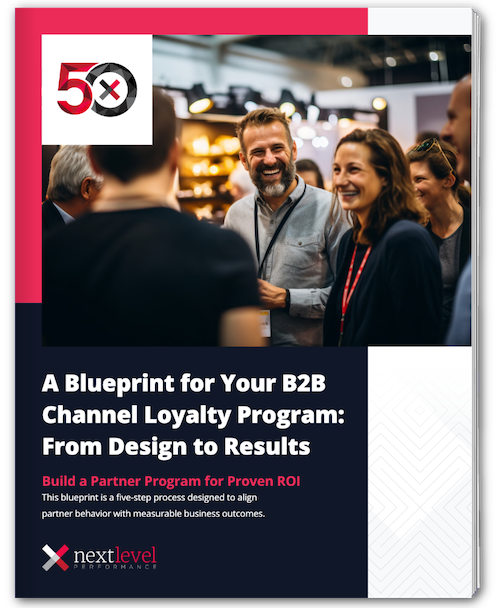
This is Step 1 of our Complete B2B Channel Loyalty Blueprint. Download the full file to learn more about each step, including design directives, structural advantages, and critical checks. Learn more →
Common Questions
Measuring channel loyalty programs.
Questions channel and sales leaders ask about tracking KPIs, proving ROI, and keeping a program's scorecard honest.
Most high-performing programs track four categories: participation (who's engaging and how consistently), sales lift (incremental performance the program influences), engagement (login frequency, resource use, redemption activity), and ROI (return relative to investment). Strong KPIs tie to a specific behavior, use data you can measure consistently, and connect to a business outcome, not just activity.
Three to five. Programs that track more than that dilute focus and make it harder to act on the data. Pick the KPIs tied directly to the business priorities you defined upfront, whether that's revenue growth, market share expansion, or product adoption, and resist the urge to measure everything just because you can.
Participation measures who's involved and how consistently they show up. Engagement measures depth: how often participants log in, use available resources, and redeem points. A program can have strong participation numbers while engagement quietly erodes, which is why tracking both, not just one, catches problems before they show up in sales lift.
Monthly or quarterly. A scorecard only works if someone actually looks at it on a set cadence, tracks performance against each KPI, and shares trends with stakeholders. Programs that skip this step tend to keep running the same tactics long after the data says to adjust, because nobody built in a moment to check.
Usually because they measured the wrong things from the start. Common causes: too many KPIs diluting focus, tracking activity instead of outcomes, setting targets with no baseline data, and never revisiting goals as the program matures. Each traces back to the same root problem: the program launched without clear objectives tied to business priorities.
A one-page document covering program objectives and intended outcomes, target audience and eligibility, the specific behaviors you're incentivizing, your KPIs and success metrics, and budget parameters. This brief becomes the reference point for every later decision, from segmentation to rewards design, so program teams stay aligned instead of drifting in different directions.



Let’s Talk
Ready to take the next step?
Contact us today to connect with one of our experts.